


Game Overview
What is Who Dies Last?
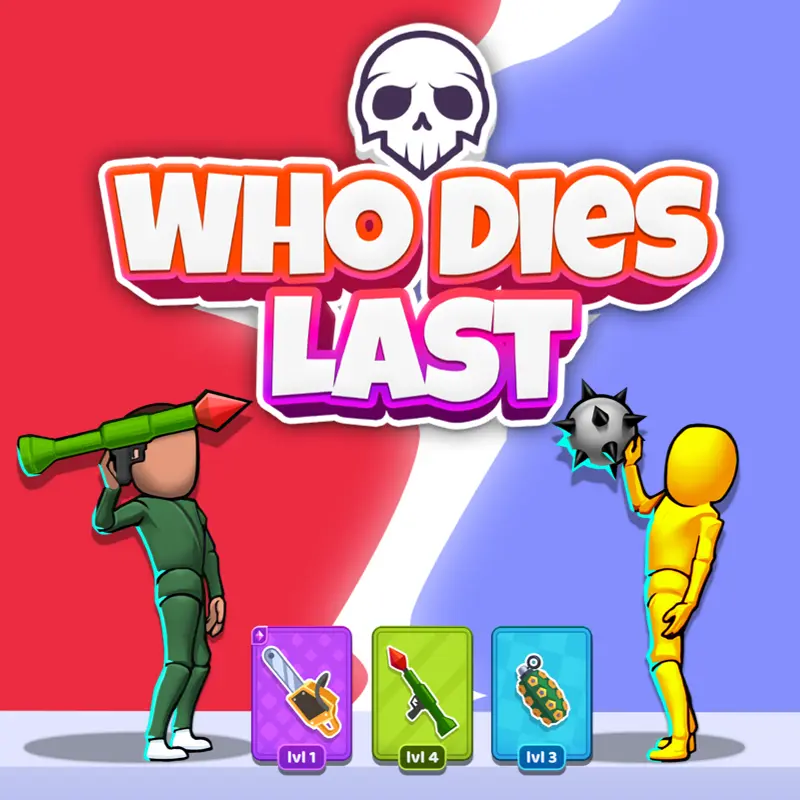
Who Dies Last? is a chaotic stickman battle game built around ragdoll physics, weapons, and unpredictable reactions. The goal is easy to understand: make your opponent fall first while avoiding the same fate yourself.
The game is not only about clicking quickly. Because attacks, explosions, movement, and character reactions are physics-based, a careless move can backfire. A weapon that looks useful can also put your own fighter in danger if you aim from the wrong position or attack too close to the blast.
Compared with cleaner fighting games, Who Dies Last? feels messier on purpose. The fun comes from choosing a fighter, preparing weapons, reading the arena, and accepting that every round can turn into a strange chain reaction. Winning is about causing enough chaos without standing in the worst part of it.
Battle Flow
How to Play Who Dies Last?
A round usually starts with simple preparation, but the real decision-making begins once both stickmen are exposed to weapons, movement, and physics. Treat each fight as a short survival puzzle rather than a button-mashing duel.
- Choose your stickman fighter from the available in-game options.
- Equip or select weapons through the game interface before entering the fight.
- Use the mouse to interact with menus, aim attacks, and activate weapons when prompted.
- Watch the distance between your fighter, the opponent, and explosive effects before attacking.
- Try to eliminate the rival first, but avoid attacks that can throw your own character into danger.
Mouse & Touch
Controls
Survival Strategy
Why Positioning Matters More Than Spamming
Who Dies Last? rewards timing and placement because the same weapon can be helpful or dangerous depending on where your fighter stands. If you attack without checking the space around you, the physics system can turn your own plan against you.
- Keep space between your fighter and explosive effects whenever possible.
- Aim from a position where a missed attack is less likely to punish you immediately.
- Avoid repeating the same attack pattern if the opponent is no longer exposed.
- Use weapons to create pressure, but do not stand inside the area where the reaction will happen.
- Wait for a cleaner angle when both fighters are close together, because one bad blast can hurt both sides.
Battle Notes
Common Mistakes That End a Round Early
Most failed rounds are not caused by the opponent alone. They often come from rushed aiming, poor spacing, or ignoring how ragdoll movement can change the fight after the first hit.
- Attacking as soon as a weapon is available without checking your own distance from danger.
- Aiming only at the opponent and ignoring walls, platforms, or nearby explosive impact zones.
- Using powerful attacks when both fighters are too close together.
- Assuming every weapon behaves the same instead of testing how each one affects movement.
- Chasing chaos after a successful hit instead of waiting to see where both fighters land.
FAQ
Who Dies Last? FAQ
What is the goal of Who Dies Last?
The goal is to survive longer than your opponent by using weapons, timing, positioning, and physics-based reactions to make the rival fall first.
Is Who Dies Last? a keyboard game?
The public control information focuses on mouse interaction. Use the left mouse button to interact, aim, drag, and activate weapons when prompted.
Can Who Dies Last? be played on mobile?
Yes. Public game listings describe it as playable in the browser on desktop, mobile, and tablet, with touch controls replacing mouse actions on smaller devices.
What makes Who Dies Last? different from a normal fighting game?
The ragdoll physics make outcomes less predictable. Attacks can launch characters, create chain reactions, or punish poor positioning, so survival is not only about attacking first.
What should beginners focus on first?
Beginners should focus on safe distance, careful aiming, and learning how each weapon affects the arena before trying risky attacks.