




Game Overview
What is Cheat or Repeat?
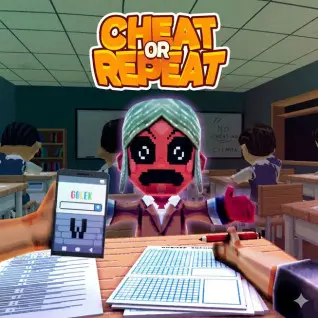
Cheat or Repeat is a free online stealth horror exam game where you play as an unprepared student trying to pass a test by secretly using your phone for answers. Watch the teacher, search quickly, choose the correct answer, and hide your phone before you get caught.
The pressure comes from the gap between what you want to do and what is safe to do. Checking your phone for too long may help you find an answer, but it also gives the teacher more time to notice. Acting too early can waste a chance, while acting too late can leave you with no room to recover. A good run usually comes from small, controlled actions instead of one long risky move.
Compared with many simple reaction games, Cheat or Repeat feels tense because every decision has a cost. You need to balance progress on the exam with the risk of exposure. The best strategy is not to cheat constantly, but to recognize when the room gives you a brief opening and use that opening efficiently.
Guide
How to Play Cheat or Repeat
Start the game in the frame above and focus on the classroom rhythm before trying to rush. Your main task is to complete the exam while secretly using your phone only when the situation looks safe. Treat every phone check as a risk: the longer you stay exposed, the easier it is to lose the attempt.
- Watch the teacher first, then act. Do not open your phone just because the next answer is needed.
- Use short phone checks instead of long ones. A brief look is safer than trying to solve everything at once.
- Return to the exam quickly after getting enough information. Staying hidden is as important as finding the answer.
- Pay attention to changes in the teacher’s movement or timing. Later moments can feel less forgiving than the beginning.
- Restart after a mistake and identify what caused it: opening the phone too early, holding it too long, or ignoring the teacher.
PC Controls
Controls
Strategy
Useful Strategy for Cleaner Runs
The biggest improvement usually comes from changing how you think about risk. Instead of asking “Can I cheat now?”, ask “Can I stop cheating safely if the teacher reacts?” That mindset helps you avoid long exposed actions.
- Spend the first attempt learning the pace. Do not judge the game only by the opening seconds.
- Use the phone in short bursts. If you need more information, wait for another safe window instead of forcing one long check.
- Keep your cursor or attention ready to return to the exam. Slow recovery can be just as dangerous as a bad start.
- Avoid panic clicking after a warning moment. One clean action is usually safer than several rushed actions.
- Use fullscreen if the default frame makes it hard to read small movements or timing changes.
Risk Control
Common Mistakes That End a Run
Most failed attempts are not random. They usually come from one of a few repeatable mistakes. Once you know which mistake you are making, the game becomes easier to improve at.
- Opening the phone immediately without checking the teacher’s current state.
- Keeping the phone open after you already have enough information to continue.
- Trying to answer and hide at the same time instead of separating those actions.
- Ignoring the rhythm of the classroom and playing every moment at the same speed.
- Restarting without learning why the previous attempt failed.
FAQ
Cheat or Repeat FAQ
What is the main goal in Cheat or Repeat?
The goal is to get through the exam by finding answers while avoiding the teacher’s attention. Progress matters, but staying unnoticed is the key to finishing a run.
Is Cheat or Repeat only about fast reactions?
No. Fast reactions help, but timing and risk control are more important. A slow, careful phone check at the right moment is usually better than a fast action at the wrong time.
Why do I keep getting caught?
You are probably staying exposed too long or acting before the classroom gives you a safe window. Try shorter phone checks and return to the exam earlier.
Should I play in fullscreen mode?
Fullscreen is useful because it gives more space to see the game frame clearly. That can make teacher movement, prompts, and timing cues easier to notice.
Does the game open in a new window?
No. The game is embedded directly on this page. You can start it with the Play button and use the fullscreen option if you want a larger play area.